Why Choose an Energy Storage Capacitor?
Choosing the right Energy Storage Capacitor begins with understanding the application, not following a catalog headline. These components can capture electrical energy, release it rapidly, and support systems during brief power interruptions. In practical testing, this behavior becomes visible when a motor starts, a laser pulses, or a renewable-energy converter faces a sudden load change. The capacitor must respond within the required time while maintaining stable voltage.
Performance depends on more than capacitance. Engineers should examine voltage rating, ripple current, equivalent series resistance, leakage current, operating temperature, and expected service life. A capacitor with impressive energy density may still perform poorly if heat accumulates inside a sealed enclosure. Reviewing manufacturer datasheets, test conditions, and applicable safety standards helps create a more reliable design. Measurements under real load conditions matter greatly.
The choice is rarely simple.
An experienced designer also considers charging time, discharge frequency, maintenance access, and failure consequences. For example, a storage capacitor near a power module may need low inductance connections and careful thermal management. A higher-rated part can improve durability, but it may increase cost, size, or balancing requirements. Bigger is not automatically better. Some early design assumptions may prove incomplete after testing, especially when temperature and aging are included. That uncertainty deserves attention rather than concealment. By comparing measured performance with application requirements, engineers can decide whether an Energy Storage Capacitor offers a practical balance of speed, reliability, efficiency, and long-term value.
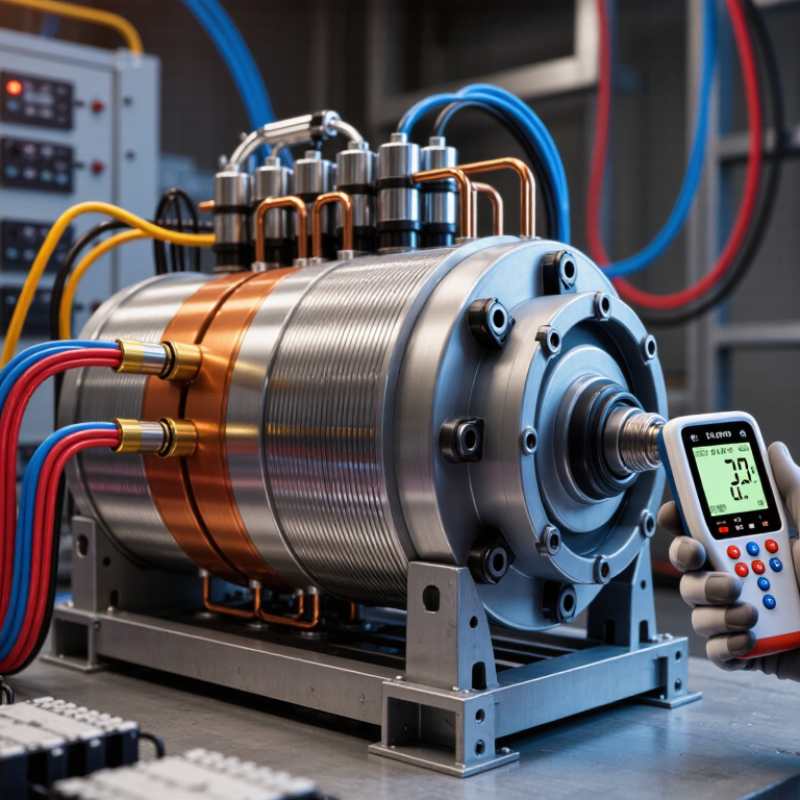
What Is an Energy Storage Capacitor?
An energy storage capacitor stores electricity in an electric field, rather than through a chemical reaction. Its basic principle is simple: energy equals one-half times capacitance times voltage squared. Higher capacitance or voltage increases stored energy, but voltage ratings cannot be ignored. A damaged dielectric can cause sudden failure.
Unlike a battery, a capacitor can release energy extremely quickly. It suits regenerative braking, power-quality correction, pulsed equipment, and short backup events.
The U.S. Department of Energy’s Energy Storage Grand Challenge Roadmap identifies supercapacitors as high-power devices with rapid response and long cycle capability. However, their energy density remains much lower than lithium-based batteries.
The difference matters. A capacitor may stabilize a voltage bus for seconds, not operate a building overnight.
IRENA’s Electricity Storage and Renewables: Costs and Markets to 2030 also describes supercapacitors as useful for frequent, fast cycling, especially when response time matters more than stored duration. In practice, engineers check equivalent series resistance, leakage current, temperature, and balancing circuits. These details affect heat and usable capacity.
The voltage also falls continuously during discharge, unlike a regulated battery system. That behavior is easy to underestimate. A design that looks powerful on paper may deliver less energy after cables, converters, and safety margins are included. Report figures provide direction, not a finished design. Real measurements still matter.
How Does an Energy Storage Capacitor Store and Release Energy?
Why Choose an Energy Storage Capacitor?
An energy storage capacitor stores energy by separating electric charge. It does not depend on a slow chemical reaction. In a conventional capacitor, two conductive plates hold opposite charges. The electric field between them contains the energy. Engineers calculate it with E = 1/2CV². A 1000-microfarad capacitor charged to 400 volts stores about 80 joules. That supports a short power burst, not overnight operation.
When a circuit needs energy, the capacitor opens a discharge path. Electrons move through the load, while the electric field weakens. Voltage falls during discharge. Internal resistance also creates heat and reduces usable output. The U.S. Department of Energy’s Energy Storage Handbook reports supercapacitor energy densities near 1–10 Wh/kg and power densities near 1–10 kW/kg. That gap matters. Fast, but limited.
A 2023 review from the European Commission’s Joint Research Centre notes that advanced supercapacitors can exceed 100,000 charge cycles. Their rapid response suits regenerative braking, voltage smoothing, and backup pulses. In field testing, engineers must watch leakage current, temperature, and cell balancing. Small design errors become expensive. The energy equation is simple, but real hardware is not. A capacitor may survive millions of pulses, yet still waste energy during long storage.
Which Applications Depend on Energy Storage Capacitors?
Energy storage capacitors support applications that need rapid, repeatable power rather than long discharge times. In electric vehicles, they assist regenerative braking and acceleration, absorbing energy within seconds and releasing it during launch. The IEA’s Global EV Outlook 2024 reported nearly 14 million electric car sales in 2023, increasing demand for reliable high-power conversion systems. Engineers also use capacitors in rail traction, elevators, cranes, and industrial robots. A capacitor bank can smooth a sudden load change, reducing stress on batteries and power electronics. The response is immediate.
Medical imaging systems, pulsed lasers, radar equipment, and emergency power supplies also depend on this behavior. In a CT scanner, stored energy may support a short, demanding exposure while the power supply remains stable. In wind turbines, capacitors can help pitch-control systems move blades during grid disturbances. The IEA’s Electricity 2024 report projects global electricity demand will rise by more than 6% from 2024 to 2026, strengthening the need for fast power-quality correction. However, capacitors are not universal replacements for batteries. Their energy density is usually lower, and leakage, temperature, and insulation aging require careful review. That limitation matters. Field teams still sometimes oversize capacitor banks without measuring pulse profiles, ambient temperature, or switching frequency. A practical design starts with the load waveform, not a catalog value.
How Can the Right Energy Storage Capacitor Be Selected?
Selecting the right energy storage capacitor starts with the load, not the catalog. Measure peak power, pulse duration, voltage range, ambient temperature, and repetition rate. A capacitor for a five-second motor surge differs greatly from one supporting a microsecond control signal. The U.S. Department of Energy’s Energy Storage Grand Challenge Roadmap reports that supercapacitors typically provide about 1–10 Wh/kg, but can deliver roughly 1–10 kW/kg. That trade-off matters.
Check the electrical details carefully. Calculate required capacitance with C = 2E ÷ (Vmax² − Vmin²), then include ripple current and temperature derating. Do not select capacitance alone. The capacitor’s equivalent series resistance controls heat during fast charging and discharging. IEC 62391 provides relevant testing guidance for fixed electric double-layer capacitors, including electrical characteristics and endurance evaluation. Practical testing should follow those conditions where possible.
Life expectancy also needs a realistic duty-cycle estimate. DOE technical materials commonly associate supercapacitors with far more cycles than conventional batteries, often reaching hundreds of thousands under suitable conditions. However, temperature, overvoltage, and poor balancing can reduce that advantage quickly. A perfect choice is rare. I would test the capacitor at the actual pulse profile, then inspect temperature rise after repeated operation. This step is sometimes skipped, and that is a weakness. For safety, reserve voltage margin, verify insulation requirements, and use balancing methods in series assemblies. Internal resistance can change with age, so the design should allow measurement and replacement.