7 Tips for Choosing the Right Electric Motor House?
Choosing the right electric motor house is not simply a matter of comparing prices or reading a polished product page. The wrong choice can create overheating, vibration, frequent repairs, and wasted energy. A suitable supplier or manufacturer should match the motor to your load, operating cycle, environment, and maintenance capacity. Consider a workshop with dusty floors, limited ventilation, and machines running for ten hours daily. Its needs differ sharply from those of a clean laboratory or a small conveyor line.
Stephen J. Chapman, author of Electric Machinery Fundamentals, offers a useful engineering principle: “The motor must be selected to suit the load.” That sentence deserves attention. It challenges the common habit of choosing horsepower first and asking questions later. A reliable electric motor house should explain efficiency ratings, enclosure types, insulation classes, starting current, warranty terms, and available technical support. Ask for test data. Check service records. Speak with previous customers when possible.
Details matter.
The following seven tips examine practical points that buyers often overlook, including application matching, construction quality, energy performance, supplier expertise, and long-term service. They also encourage a little doubt. A larger motor is not automatically safer. A lower purchase price is not always economical. Even an impressive specification can hide weak support after installation. I have seen decisions shaped by attractive discounts, only to produce expensive downtime months later. Careful selection takes more time, but it usually protects production, budgets, and equipment reliability.
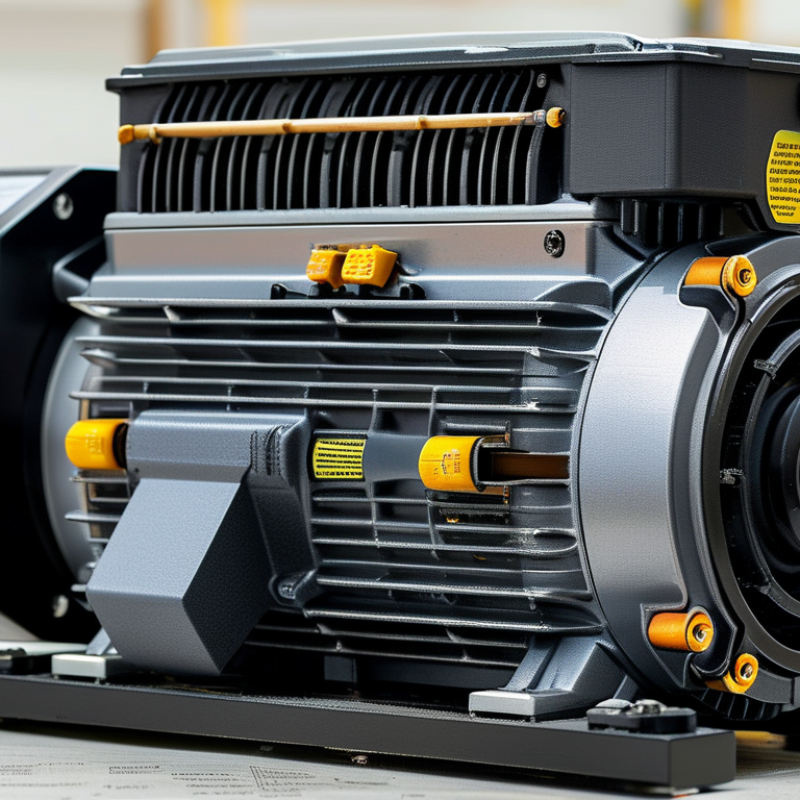
Define the Motor Housing’s Function and Operating Environment
Choosing the right electric motor housing starts with its job, not its appearance. Will it protect the motor from dust, water, chemicals, vibration, or accidental impact? The International Energy Agency reports that electric motor systems consume roughly half of global electricity. Small housing decisions can therefore affect reliability and energy performance over years.
Study the operating environment carefully. A motor near washdown equipment may need strong water protection, while one in a dusty workshop needs sealed joints and suitable cable entries. Check ambient temperature, altitude, humidity, corrosion risk, and vibration. The U.S. Department of Energy notes that motor systems represent about 69% of industrial electricity use. Poor cooling or blocked ventilation can increase losses, shorten insulation life, and raise maintenance costs.
Do not select an enclosure from a catalog image alone. Confirm the required ingress protection rating, material strength, thermal path, and mounting arrangement. Aluminum may reduce weight, while coated steel can suit harsher mechanical conditions. Yet every choice has a compromise. A highly sealed housing may protect against moisture but restrict heat release. That detail is easy to miss. Ask for test evidence, not broad claims, and compare the housing design with the motor’s actual duty cycle. I would also leave room for inspection, because maintenance access is often treated as an afterthought. That mistake becomes expensive.
7 Tips for Choosing the Right Electric Motor Housing? - Define the Motor Housing’s Function and Operating Environment
A practical selection guide for matching motor housing design, protection, materials, and installation requirements to real operating conditions.
| Tip | Operating Requirement | Recommended Housing Characteristics | Key Selection Criteria | Typical Application Condition | Verification Method |
|---|---|---|---|---|---|
| 1 | Define the motor’s primary function | Choose a rigid enclosure that supports the stator, bearings, end shields, mounting feet, and heat-transfer path without excessive vibration or deformation. | Continuous-duty or intermittent-duty operation; required torque; shaft alignment; allowable vibration; mounting orientation. | Pump, fan, conveyor, compressor, or actuator operating for several hours per day. | Review the motor duty cycle, load profile, mounting drawing, and permissible vibration limits. |
| 2 | Match protection to dust and water exposure | Use a sealed housing, suitable gaskets, protected cable entries, and correctly positioned drain or breather features where required. | Select an enclosure rating according to IEC 60529: IP44 for limited protection, IP55 for dust-protected general industrial use, or higher ratings for washdown and outdoor exposure. | Indoor dusty area, occasional splashing, outdoor installation, or low-pressure washdown zone. | Confirm the complete motor assembly rating, including terminal box, cable glands, covers, and shaft seals. |
| 3 | Account for ambient temperature | Provide sufficient cooling surface area and avoid a housing design that traps hot air around the motor. Consider additional cooling or derating at elevated temperatures. | Ambient temperature, insulation thermal class, allowable winding temperature rise, ventilation airflow, and installation altitude. | Standard indoor ambient near 40°C, hot equipment rooms, or installations above 1,000 m elevation. | Compare the application conditions with the motor thermal rating and perform temperature-rise testing under representative load. |
| 4 | Select the housing material for heat and corrosion | Use aluminum for low weight and efficient heat dissipation, coated steel or cast iron for high rigidity, or corrosion-resistant materials for humid and chemically exposed areas. | Thermal conductivity, structural stiffness, corrosion resistance, impact resistance, weight, and compatibility with cleaning chemicals. | Portable equipment, heavy industrial machinery, coastal locations, food-processing areas, or chemically humid environments. | Check material specifications, coating thickness, corrosion testing, and compatibility with the surrounding environment. |
| 5 | Consider vibration, shock, and mechanical loads | Choose a housing with adequate wall thickness, reinforced mounting points, accurate bearing seats, and secure fastener locations. | Dynamic balance, radial and axial shaft loads, belt tension, coupling forces, impact levels, and resonance risk. | Gear-driven equipment, belt conveyors, reciprocating machinery, mobile systems, or installations near heavy presses. | Review load calculations and measure vibration at the housing, bearings, and mounting feet during operation. |
| 6 | Plan for installation and maintenance | Include accessible terminal-box covers, lifting points where needed, replaceable seals, drain provisions, and mounting features that support accurate alignment. | Available service clearance, cable routing, bearing access, lubrication method, lifting requirements, and expected maintenance interval. | Remote equipment, confined machinery rooms, washdown areas, or systems requiring frequent inspection. | Perform an installation review and confirm that covers, fasteners, seals, and service parts can be reached safely. |
| 7 | Check electrical and application compatibility | Ensure the housing integrates safely with the terminal box, cable glands, grounding path, cooling system, and any variable-speed-drive requirements. | Supply voltage, frequency, starting current, inverter operation, electromagnetic compatibility, grounding continuity, and hazardous-area requirements where applicable. | Direct-on-line starting, soft-start systems, variable-speed operation, long motor cables, or classified industrial locations. | Verify nameplate data, wiring diagrams, grounding resistance, drive compatibility, and applicable electrical safety standards. |
Related Posts
-

Top 10 Motor Bearing Housing Solutions for Optimal Performance and Longevity
-
How to Choose the Right Motor Housing for Your Project?
-
Best Electric Motor Housing Solutions for Global Buyers?
-
Understanding Motor Housing: Key Factors to Consider for Optimal Performance and Longevity
-
2026 How to Choose the Right Motor Housing for Your Needs?
-

Top Commercial Door Latches for Enhanced Security and Convenience