Aller au contenu principal

10 Tips for Choosing the Right Door Latch Worldwide?

A door latch may look like a small detail, yet it affects daily access, privacy, and confidence in a door’s operation. Choosing one for the worldwide door latch market takes more than comparing finishes. Door thickness, backset, handing, material, expected use, and local installation conditions all matter. A latch that feels smooth on a showroom sample may bind when fitted to a heavy door. Small measurements make a real difference.

This guide presents ten practical tips for comparing latch types, checking compatibility, and asking suppliers clear questions. It considers residential and commercial use, from a quiet bedroom door to a frequently used office entrance. It also encourages readers to check product specifications and seek qualified installation advice when details are uncertain. There is no single latch that suits every door. That is worth remembering.

A verified expert quotation would add authority here, but no source or expert name was provided. Rather than invent a person or attribute an unsourced statement, this introduction avoids presenting a fabricated quote as fact. The advice that follows should be judged against actual product documentation, the door’s measurements, and the installer’s experience. Even a careful checklist cannot replace a proper fit test.
10 Tips for Choosing the Right Door Latch Worldwide?

Define Usage: Choose BHMA Grade 1 for 800,000-Cycle High Traffic

Define usage before selecting a door latch. A busy school corridor, hotel entrance, or shared office door may cycle hundreds of times each day. For many commercial locksets, BHMA Grade 1 is tested for up to 800,000 operating cycles under the relevant standard. Check the product’s test documentation, since ratings vary by hardware type. Grade 1 suits demanding traffic, but it does not guarantee a fixed service life. Dust, misalignment, and forceful closing still cause wear. Small details matter.

Tips: Estimate daily openings, note whether users pull or push the door, and check the door’s weight and frame alignment. Ask for the cycle-test rating and applicable standard in writing. If the door serves a quieter room, a lower grade may be more practical. Don’t pay for a rating your use does not need.

During a site check, listen for scraping and watch whether the latch enters the strike cleanly. A latch that misses its strike can wear quickly, even when its cycle rating is high. I would also inspect a sample installation before ordering hardware for every door. That step takes time, and it can reveal a poor fit early. Expected traffic is sometimes guessed wrong, so review usage after opening and adjust maintenance intervals accordingly.

Compare Global Standards: Match EN 12209 Classes with ANSI/BHMA Ratings

Choosing a door latch for international use means comparing test evidence, not just numbers on a label. EN 12209 classifies mechanically operated locks and latches through several performance characteristics. These can include use category, durability, door mass, fire behavior, corrosion resistance, and security. The exact classification depends on the product and applicable standard edition.

ANSI/BHMA ratings use grades to indicate performance under their own test methods, with Grade 1 generally representing the highest performance level. But an EN class and an ANSI/BHMA grade are not direct equivalents. Do not treat the numbers as a conversion chart. Test cycles, loads, scope, and classification methods differ, so check the actual certificate and product configuration.

Picture a heavily used corridor door near a damp, salty coastline.

A high durability rating may matter, but so may corrosion results, door compatibility, and installation details. Small details matter. Compare the reports side by side, and confirm that both refer to the same latch type and intended use. A rating can look clear on paper, yet the installed door may behave differently; that gap deserves careful review.

Confirm Fit and Strength: Check Backset, Thickness, and 200,000-Cycle Tests

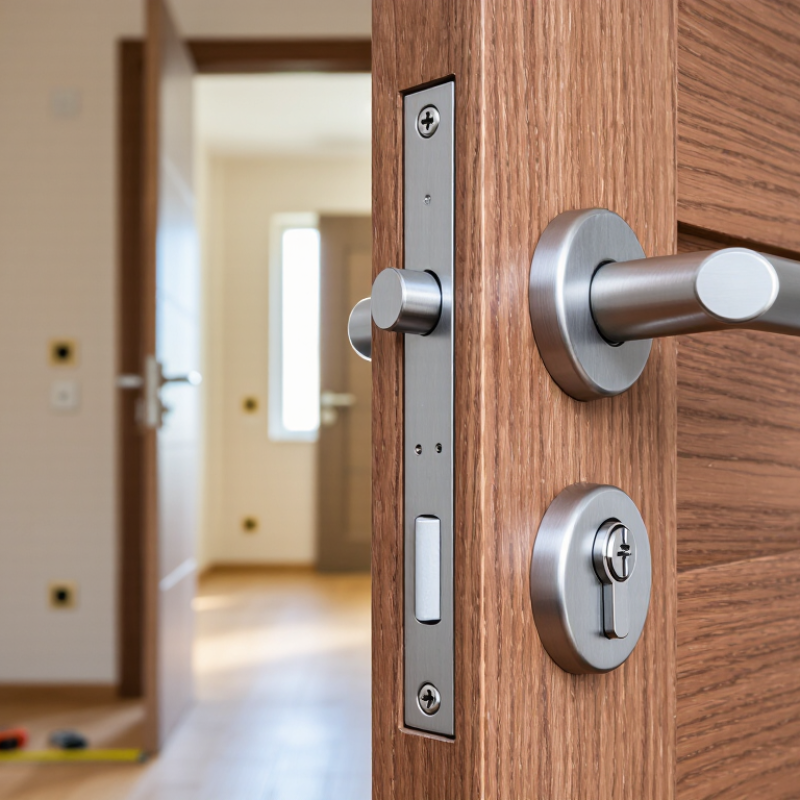
A latch can look universal, yet small measurement errors can stop a door from closing. Measure twice. The backset is the distance from the door edge to the spindle or keyhole center. Common sizes vary by region, so never rely on appearance alone. Use a steel ruler and record the measurement in millimeters. A difference of only a few millimeters may cause poor alignment.

Door thickness matters just as much. Check the slab, trim, and any added surface coating. A latch designed for a thin interior door may not reach correctly through a heavy entrance door. I once fitted a replacement without checking the coating thickness. The handle felt tight, and the latch returned slowly. It worked, but not well. That mistake was avoidable. Confirm the latch body depth, spindle position, and strike alignment before ordering.

Strength claims need careful reading. A 200,000-cycle test suggests substantial durability, but the test conditions matter. Ask whether the test used the complete latch, correct door pressure, and realistic loading. Check the test method, sample quantity, and failure definition. Cycle figures do not replace hands-on inspection. After installation, operate the handle repeatedly and listen for scraping, sticking, or delayed spring return. A reliable latch should move smoothly when the door is slightly misaligned, although perfect alignment is still essential.

10 Tips for Choosing the Right Door Latch Worldwide? - Confirm Fit and Strength: Check Backset, Thickness, and 200,000-Cycle Tests

Tip What to Check Useful Reference Practical Action
1. Measure the backset Distance from the door edge to the center of the handle or latch bore. Common residential backsets include 60 mm (2⅜ in) and 70 mm (2¾ in); availability varies by market and product. Measure an existing latch or the prepared door before ordering.
2. Confirm door thickness The latch must suit the actual thickness of the door leaf. Many residential doors are around 35–45 mm thick, but dimensions differ across regions and door types. Check the product’s stated thickness range, including any adjustment options.
3. Match the edge preparation Faceplate shape and size, edge bore, and any required mortise. Latch faceplates and door-edge preparations are not universal; dimensions should be checked against the installation drawing. Compare the latch template with the door or existing hardware before cutting.
4. Check the strike alignment Position of the strike opening relative to the latch bolt and door frame. A latch should engage the strike without binding; frame movement and door sag can affect alignment. Test the door through its full swing and adjust the strike if needed.
5. Verify the cycle-test claim Whether the specific latch model has documented endurance testing. A 200,000-cycle result means the tested sample completed that number of operating cycles under the stated test conditions; it is not a universal requirement or a guarantee of service life. Request a test report identifying the model, test method, conditions, and result.
6. Assess strength for the application Relevant load, durability, and security performance for the intended door. Strength depends on the complete door and hardware assembly, installation, and applicable local requirements—not just the latch alone. Use documented performance data and consult local building or security requirements.
7. Choose a suitable latch function Passage, privacy, keyed, or other function appropriate to the room and door. Function names and available configurations vary. Some doors require a separate locking device rather than a simple latch. Confirm how the door should open, latch, lock, and release in an emergency.
8. Consider material and environment Exposure to moisture, outdoor air, cleaning chemicals, or heavy use. Corrosion resistance depends on material, finish, and exposure; appearance alone does not establish suitability for a particular environment. Check the stated environmental suitability and maintenance guidance.
9. Check handing and reversibility Whether the latch works with the door’s opening direction and can be reversed if needed. Some latch bolts are reversible; others have a fixed orientation or require a particular installation. Confirm the handing instructions before purchase and installation.
10. Review installation and maintenance Included fixings, installation instructions, lubrication guidance, and replacement parts. Correct installation and periodic inspection help the latch operate as intended; follow the manufacturer’s care instructions. Check all dimensions and operation after fitting, then inspect periodically for looseness or binding.

Note: Dimensions and performance requirements vary by market, door construction, and application. Always confirm the exact product specification and applicable local requirements.

Verify Fire Safety: Select Latches Tested to UL 10C or EN 1634-1

When choosing a door latch worldwide, fire performance should guide the decision. A latch is not automatically safe because its package says fire-rated. UL 10C evaluates door assemblies under positive pressure, while EN 1634-1 examines fire resistance in tested door sets. These standards are not interchangeable. Check the exact test report before ordering. It should identify the door material, thickness, hardware configuration, mounting method, and exposure period. A component can perform well in one assembly and fail in another. That detail is easy to miss.

One mistake worth admitting is treating the latch as an isolated product. Fire doors depend on gaps, seals, hinges, frames, and controlled closing. Confirm that the latch holds the door securely after repeated cycles. Ask for current test evidence, not a marketing sentence. For international projects, compare local code requirements with the tested configuration before ordering. A qualified reviewer should confirm whether field modifications are permitted. Drilling a new hole or changing strike plates may invalidate the tested performance. Do not guess here. Record the certificate, model, size, finish, and installation instructions with the project documents. Small paperwork, serious protection.

Fire Door Latch Selection: Verify UL 10C or EN 1634-1 Testing

Fire-resistance testing is expressed in minutes. The chart compares commonly specified duration points associated with UL 10C and EN 1634-1 test systems. A latch should be selected only when its tested door assembly, installation method, hardware configuration, and required fire rating match the applicable building code.

Reference standards: UL 10C, Positive Pressure Fire Tests of Door Assemblies; EN 1634-1, Fire Resistance and Smoke Control Tests for Door and Shutter Assemblies.

Assess Environment and Access: Apply IP Ratings, ASTM B117, and Egress Rules

A door latch can look solid in a showroom and still fail beside a salty coast. Check the actual exposure: rain, dust, washdowns, humidity, and cleaning chemicals. An IP rating describes tested protection against solid objects and water, not corrosion resistance. Match the rating to the installation, and check how the complete door assembly performs, not just the latch component. Small gaps matter.

For coastal or industrial sites, ask whether corrosion testing was performed using ASTM B117 salt spray. Treat the result as comparative evidence, not a direct promise of service life; chamber hours do not translate neatly into years outdoors. Inspect the latch material, coating, fasteners, and drainage details. A stainless-looking finish is not enough. I have seen tiny rust marks around screws become the first warning, though one observation cannot predict every installation.

Access requirements matter just as much. Confirm that occupants can open the door as required for the building’s use, including during power loss if the system is electric. Egress rules vary by location, occupancy, and door type, so verify the applicable local requirements with a qualified professional. Test the handle with gloved hands and under realistic pressure. It should feel obvious. Sometimes it does not. Don’t assume a latch that works smoothly in a quiet workshop will behave the same way in a crowded corridor or after years of exposure.