Aller au contenu principal

Top Electric Motor Housing Types and Their Applications Explained

The selection of electric motor housing is crucial for various applications. These housings provide protection, support, and efficiency. Each type has its distinct features and benefits, impacting overall performance.

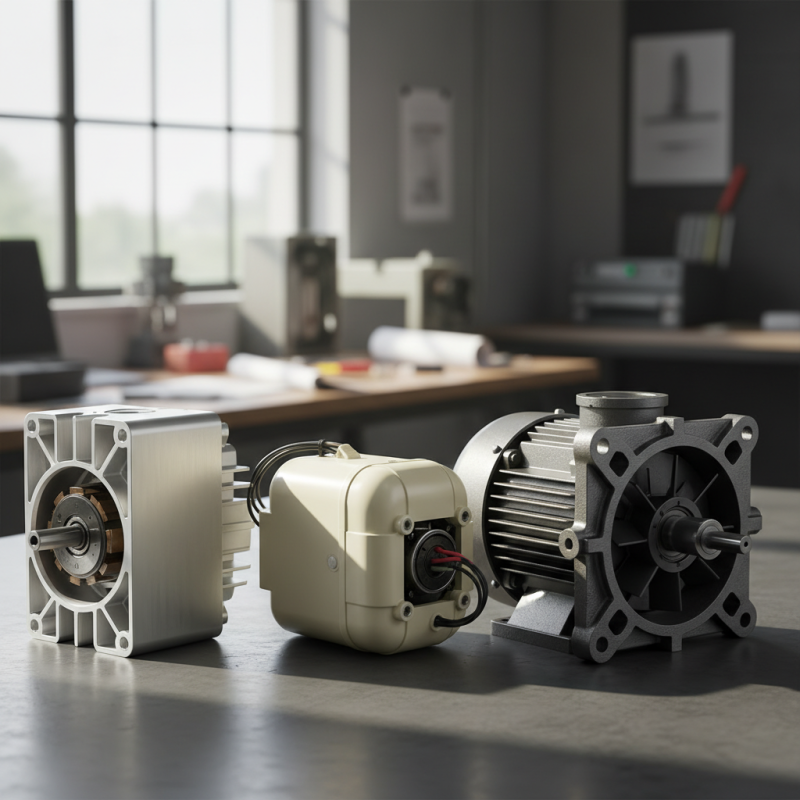
There are several types of electric motor housing, including aluminum, plastic, and cast iron. Aluminum is lightweight and resistant to corrosion. It suits many environments, particularly where weight is a concern. Plastic housings are often cheaper and offer good insulation. They work well in small devices. Cast iron is known for its durability and strength but can be overly heavy for certain applications.

Choosing the right electric motor housing is not always straightforward. Factors like environmental conditions and mechanical requirements must be carefully evaluated. Sometimes, an unsuitable choice may lead to problems like overheating or mechanical failure. Thus, a thoughtful approach is essential to ensure optimal motor performance.
Top Electric Motor Housing Types and Their Applications Explained

Types of Electric Motor Housings: An Overview
Top Electric Motor Housing Types and Their Applications Explained

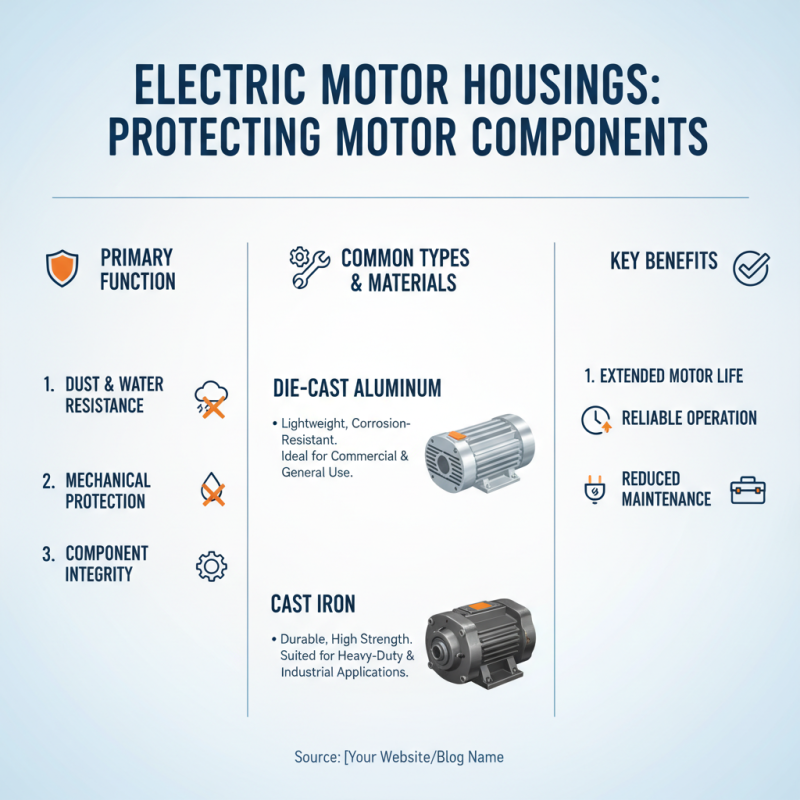
Electric motor housings play a critical role in protecting motor components. They shield against dust, water, and mechanical damage. Various types of housings exist, each designed for specific environments and applications. For instance, the die-cast aluminum housing is common in commercial settings. Its lightweight nature makes installation easier, but it may lack the strength needed in heavy-duty applications.

Steel housings are preferred for industrial environments. They offer superior durability and resistance to harsh conditions. A report by the International Electrotechnical Commission in 2022 noted that over 60% of electric motors used in factories employed steel housings. However, they are heavier, which can complicate installations.

Plastic housings are increasingly popular for consumer electronics. They are lightweight and cost-effective. Yet, their lower heat resistance can be a concern, especially in high-performance settings. Understanding these pros and cons is vital for choosing the right housing. A poorly chosen housing can lead to motor failure, risking both time and resources.

Materials Used in Electric Motor Housing Construction

Electric motor housings are crucial for the overall performance and longevity of motors. They protect sensitive components from environmental factors like dust and moisture. Various materials are used in housing construction, each with unique benefits. Metals such as aluminum and steel are popular due to their strength. They can withstand high temperatures and mechanical stress. However, metal housings can be heavy and may require additional insulation.

Another common choice is plastic. It's lightweight and resistant to corrosion. Plastic housings are easier to mold into complex shapes. They can reduce the overall weight of the motor, which is valuable in applications like drones. But, the downside is that plastic may not handle high temperatures well.

Composite materials are becoming more popular. These blend the advantages of both metal and plastic. They offer excellent strength-to-weight ratios. However, they can be more expensive, which raises concerns for budget-conscious applications. Ultimately, the choice of material often depends on specific use cases. Each option has its strengths and weaknesses worth considering.

Common Applications of Different Electric Motor Housing Types

Electric motors come with various housing types, each tailored for specific applications. Common types include open, closed, and totally enclosed housings. Open housings allow airflow directly into the motor, which helps with cooling. However, they frequently expose the components to dust and moisture. This can reduce the motor's lifespan. According to industry reports, motors with open housings usually operate in cleaner environments.

Closed housings provide better protection against environmental factors. They are ideal for industrial equipment exposed to harsh conditions. These motors often make use of sealed bearings to prevent contamination. In contrast, totally enclosed, fan-cooled designs combine protection with efficient cooling. These are useful in applications requiring reliable performance, like HVAC systems. Reports show it is important for manufacturers to select the right housing type to enhance durability and efficiency.

Imagine a factory relying on open motors. An unexpected shutdown could lead to costly downtime. For instance, shifts in moisture levels might significantly impact production. In contrast, using totally enclosed motors in such environments could minimize risks. It's crucial to consider the environment when choosing motor housing. The right selection can lead to longer service life and reduced maintenance costs.

Top Electric Motor Housing Types and Their Applications

This bar chart illustrates the percentage distribution of common electric motor housing types and their respective applications. Aluminum and steel are the most widely used materials due to their strength and conductivity, while plastic and cast iron are selected based on specific requirements such as weight and durability.

Advantages and Disadvantages of Various Housing Designs

When considering electric motor housing types, understanding their advantages and disadvantages is crucial. Aluminum housings are lightweight, providing excellent thermal conductivity. They’re often used in applications where efficiency is key. However, aluminum can corrode in certain environments, limiting its use in harsh conditions. This limitation may lead to higher maintenance needs over time.

Steel housings offer robustness. They are ideal for high-stress applications and are resistant to physical damage. Steel can resist higher temperatures, making it suitable for heavy-duty motors. Yet, the weight of steel can be a drawback, leading to installation challenges.

In some cases, plastic housings are used. They are lightweight and cost-effective. They can resist corrosion and are easy to mold into complex shapes. However, plastics may not provide the same level of durability as metals. This trade-off could affect motor performance in demanding environments. Choosing the right material requires weighing these pros and cons carefully. Each application may reveal unique challenges that advocate for deeper reflection.

Top Electric Motor Housing Types and Their Applications Explained - Advantages and Disadvantages of Various Housing Designs

Housing Type Advantages Disadvantages Typical Applications
Cast Iron Durable and strong; excellent vibration dampening. Heavyweight; prone to rust without coating. Industrial machines, HVAC systems.
Aluminum Lightweight; good thermal conductivity. Less impact resistance compared to cast iron. Electric vehicles, household appliances.
Plastic Corrosion resistant; lightweight and easy to mold. Lower durability; limited temperature range. Small motors in toys, low-power tools.
Steel Strong and versatile; good weight-bearing capacity. Heavy; can rust if not properly treated. Heavy machinery, automotive applications.
Composite High strength-to-weight ratio; can be molded into complex shapes. Costly; requires specific manufacturing processes. Aerospace, high-performance applications.

Future Trends in Electric Motor Housing Technology

The electric motor housing landscape is changing rapidly. With increasing demand for efficiency, sustainability is a top priority. Innovative materials are being explored. For instance, lightweight composites enhance performance while reducing energy use. Future designs may also incorporate advanced thermal management systems. This ensures motors operate at optimal temperatures, extending their lifespan.

Tips: Consider how materials interact with temperature. Conduct thorough testing with new composites.

Another trend is the integration of smart technology. Sensors within the housing can monitor performance in real-time. This capability allows for immediate adjustments, enhancing efficiency. However, integrating such systems can complicate designs. Balancing functionality and simplicity is crucial.

Tips: Keep sensor placements simple to avoid malfunctions. Evaluate the trade-offs carefully before implementation.

As we look forward, sustainability can't be overlooked. Recyclable and eco-friendly materials are becoming essential. This shift may not be easy for some manufacturers. Many still rely on traditional materials. Adapting to new standards requires effort, but the payoff can be significant.

Tips: Reassess material sources regularly. Stay informed on sustainable practices in your field.