China Best Danfoss Steering Column Manufacturer?
Choosing the China best Danfoss steering column manufacturer requires more than comparing factory prices. A suitable supplier must understand steering geometry, hydraulic interfaces, shaft tolerances, and vehicle operating conditions. The term danfoss steering column may describe a replacement or compatible assembly, not automatic proof of Danfoss origin. Buyers should verify drawings, model numbers, and brand authorization before ordering. Practical experience matters here. Engineers should inspect welding, spline accuracy, bearing movement, and column lock performance. Small errors can create vibration, uneven steering, or premature wear.
A dependable manufacturer can provide material certificates, inspection reports, sample approvals, and traceable production records. Ask how each column is tested under load, temperature changes, and repeated steering cycles. Clear answers matter. The supplier should also explain packaging, corrosion protection, spare parts, warranty limits, and after-sales response times. Factory audits, video inspections, and independent testing can strengthen confidence. Yet no website can replace a physical sample. That is easy to forget.
The strongest choice is not always the cheapest or largest factory. It is the partner that communicates accurately and admits technical limitations. Check whether the design fits your tractor, marine system, utility vehicle, or industrial machine. Request dimensional reports before mass production. A careful sourcing process reduces costly modifications and safety risks. Still, the phrase “best manufacturer” remains conditional. Application, compliance requirements, batch consistency, and service support must shape the final decision. Good documentation helps. Honest verification helps more.
What Defines a Danfoss-Compatible Steering Column Manufacturer in China?
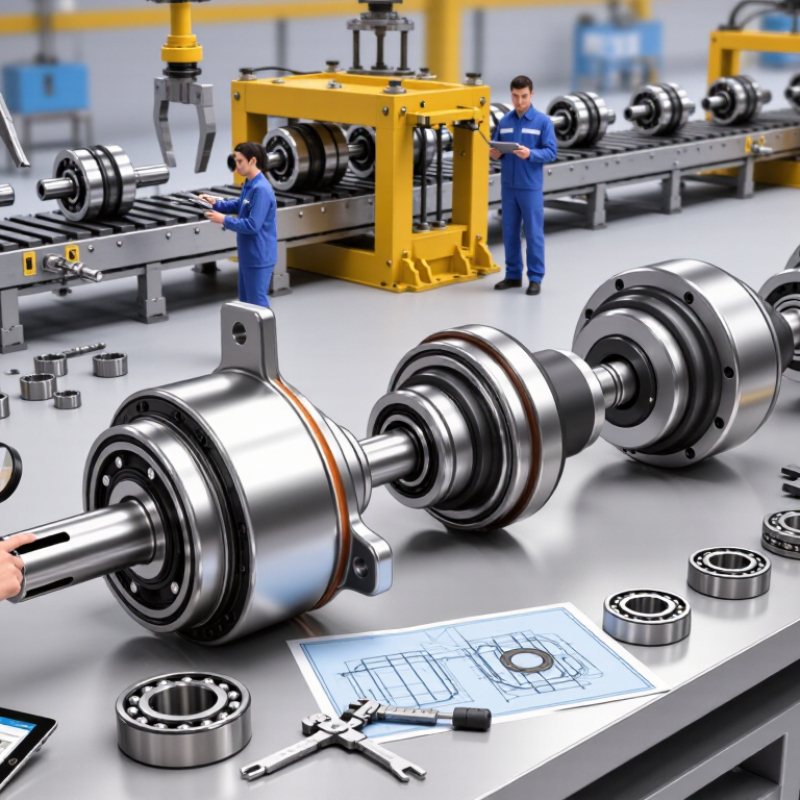
A compatible steering column manufacturer in China is defined by more than matching a catalog photo. In field work, fitment begins with measured shaft splines, mounting-hole spacing, tilt range, and hydraulic connections. Each dimension needs a controlled drawing, not a guess. Small errors can cause vibration, uneven steering effort, or difficult installation. Details matter.
An experienced factory should show how it turns measurements into repeatable production. CNC machining, heat-treated shafts, sealed bearings, and corrosion-resistant coatings are useful indicators. More important, inspectors should record runout, torque, backlash, and load results for every production batch.
Samples should survive repeated steering cycles and temperature changes. Testing must mirror the vehicle’s working environment. A clear report with serial numbers improves traceability. It also exposes weak points early.
In practice, no supplier gets everything perfect. We once found an acceptable-looking finish hiding inconsistent bore dimensions. That mistake changed our incoming inspection process.
Reliable manufacturers communicate clearly before production. They confirm interface drawings, material grades, packaging protection, and replacement-part availability. They should explain tolerances in plain language. Vague promises are not evidence. Ask for inspection records, sample approval, and photos of actual assembly lines.
Which ISO 9001:2015 and IATF 16949 Controls Ensure Manufacturing Quality?
A reliable steering-column manufacturer needs more than a polished inspection report. ISO Survey 2023 recorded 1,265,216 ISO 9001 certificates worldwide, showing how widely structured quality systems are applied. For steering components, ISO 9001:2015 controls should cover approved drawings, revision tracking, supplier evaluation, calibration, and documented inspection results. Every shaft, bracket, weld, and fastening point needs traceable records. Small gaps matter.
IATF 16949 adds stronger automotive controls. A capable factory should use process flow diagrams, PFMEA, control plans, measurement-system analysis, and statistical process control. Critical dimensions need defined limits, sampling rules, and reaction plans. Operators should scan material batches before assembly. Torque tools should lock measured values automatically. These details reduce silent variation. OICA reported 93.5 million motor vehicles were produced globally in 2023, making repeatable production essential across high-volume supply chains.
Corrective action must reach the process, not only the final product. Internal audits, layered process audits, and supplier scorecards can expose recurring weaknesses. Nonconforming parts should be quarantined physically and electronically. IATF requirements also demand risk-based thinking, contingency planning, and customer-specific controls. However, certification alone proves limited performance. A factory may pass an audit while allowing rushed inspections during peak demand. That uncomfortable possibility deserves review. Experienced auditors should compare records with the factory floor, interview operators, and verify whether corrective actions actually prevent recurrence.
How Do 12V/24V Testing and IP65 Protection Affect Steering Column Reliability?
Choosing a reliable steering column manufacturer in China requires more than a polished catalog. In field inspections, I examine electrical testing, sealing details, and traceable records. A 12V system should face cold starts, repeated steering loads, and voltage variation. A 24V version needs equal discipline, not a simple change of test label. Voltage spikes can expose weak relays, loose terminals, or poorly crimped wires. These faults may appear months after installation. Short bench tests often miss them.
IP65 protection adds another practical checkpoint. The first number addresses dust; the second concerns water jets. It does not mean permanent submersion. During validation, technicians should inspect cable glands, connector locks, shaft seals, and housing joints. A spray test alone is not enough. Dust and water may enter after vibration creates a narrow gap. I prefer samples tested before and after vibration, temperature cycling, and repeated adjustment.
A dependable supplier explains failures without hiding them. That matters. Ask whether 12V and 24V columns use separate protective settings. Check overload recovery, current draw, insulation resistance, steering smoothness, and abnormal noise. I have seen a column pass electrical checks yet develop stiffness after dusty cycling. That result changed our inspection plan. No test is perfect, and IP ratings are sometimes misunderstood. Honest records should show test limits, sample numbers, and measured changes over time.
What CNC Tolerances, Load Ratings, and Fatigue Tests Should Buyers Compare?
Buyers comparing a steering column manufacturer should examine CNC tolerances beyond simple marketing claims. Ask for drawings showing datums, bore sizes, shaft runout, and spline alignment. Critical fits may require tolerances near ±0.02 mm, but the correct value depends on material and assembly design. A tighter tolerance is not automatically better. It can increase cost or create binding during temperature changes.
Load ratings need clear test conditions. Compare continuous torque, peak torque, axial force, and radial force separately. A column rated at 500 Nm may only withstand that value briefly. Request the safety factor, load direction, mounting method, and failure criteria. Numbers without test details mislead.
Fatigue testing reveals more than a static strength certificate. Look for repeated steering cycles, combined torque and axial loading, vibration, temperature changes, and corrosion exposure. Test reports should identify the sample batch, cycle count, measured wear, and final inspection results. Real service loads are uneven. They include curb impacts, sudden direction changes, and imperfect installation. I would not treat one successful prototype as proof of durability. A small runout increase after testing may seem acceptable, yet it can produce noticeable steering play later. Buyers should compare raw measurements, calibration records, material certificates, and corrective-action reports before approving production.
China Best Danfoss Steering Column Manufacturer? - What CNC Tolerances, Load Ratings, and Fatigue Tests Should Buyers Compare?
| Comparison Dimension | Buyer Benchmark / Target Range | What to Verify in Supplier Documents | Why It Matters |
|---|---|---|---|
| Steering-column application | Hydrostatic steering systems for agricultural, construction, material-handling, and off-road equipment | Vehicle type, steering unit interface, column angle, shaft length, mounting pattern, and operating environment | A steering column must match the vehicle geometry and the steering unit input shaft without misalignment or excessive joint angle. |
| Critical CNC bore diameter tolerance | Typically ±0.02 to ±0.05 mm for precision bearing or bushing bores, subject to fit design | Dimensioned drawings, inspection records, gauge calibration, and the specified fit class | Incorrect bore size can create shaft play, binding, premature bearing wear, or difficult assembly. |
| Shaft diameter and keyway tolerance | Commonly ±0.02 to ±0.05 mm on machined shaft features; keyway dimensions should follow the approved drawing and fit requirement | Coordinate-measuring-machine report, keyway width and depth results, runout measurement, and surface-finish data | Controls backlash, torque transmission, assembly consistency, and steering feel. |
| Shaft radial runout | Preferably ≤0.05 mm over the specified measuring length; tighter limits may be required for high-speed or low-play assemblies | Runout method, datum reference, measuring length, and recorded inspection values | Excessive runout may increase vibration, seal wear, friction, and input torque variation. |
| Mounting-face flatness | Approximately 0.05 to 0.10 mm across the specified mounting surface, unless the assembly drawing requires a tighter value | Flatness report, datum scheme, bolt-hole positional tolerance, and sample assembly results | Poor flatness can distort the housing, change shaft alignment, and increase bearing loads. |
| Surface roughness of shaft sealing areas | Typically Ra 0.2–0.8 μm for precision sealing surfaces, based on seal material and design | Surface-finish readings, grinding or turning process, seal specification, and contamination-control procedure | The correct finish helps limit leakage, seal damage, and abrasive wear. |
| Static steering-input torque rating | Select a design rating above the vehicle’s maximum specified steering input torque; a project-specific safety factor of approximately 1.5–2.0 is commonly evaluated | Torque-versus-deformation curve, permanent-set limit, fixture design, and test temperature | The column should transmit the required torque without yielding, cracking, or developing unacceptable play. |
| Axial load capacity | Define separately for normal operating load and abnormal-event load; verify the value using the complete mounted assembly | Compression and tension test results, allowable displacement, permanent deformation, and mounting-bolt condition | Axial loads may occur during driver entry, steering-wheel adjustment, vehicle shock, or accidental impact. |
| Bending load capacity | Evaluate at the steering-wheel rim or specified load point; acceptance should be based on no fracture, no harmful permanent bend, and retained adjustment function | Load location, lever arm, applied force, angular deflection, residual deformation, and failure mode | Bending is often more critical than pure torque because it loads the shaft, housing, bearings, and brackets simultaneously. |
| Fatigue torque test | Use a purchaser-defined cyclic torque profile; a practical screening program may include 100,000–1,000,000 cycles, depending on duty class | Alternating torque, mean torque, frequency, cycle count, lubrication condition, temperature, and post-test backlash | Cyclic torque testing identifies crack initiation, loosening, fretting, and progressive loss of steering precision. |
| Fatigue bending test | Apply a representative alternating radial load at the steering-wheel location for the agreed service-life target | Bending moment, cycle count, fixture stiffness, crack inspection method, and allowable deflection change | This test simulates repeated driver input, vibration, and shock transmitted through the steering wheel. |
| Combined-load fatigue test | Preferably combine torque, axial force, and bending moment using the vehicle’s worst credible duty profile | Multi-axis load history, phase relationship, test sequence, cycle count, and inspection criteria | Real steering-column failures may result from interacting loads rather than one isolated load case. |
| Environmental durability | Include temperature cycling, humidity, dust, water spray, salt exposure, and vibration as required by the vehicle application | Test temperatures, exposure duration, corrosion rating, ingress condition, lubricant type, and functional results after exposure | Off-road equipment may experience mud, water, dust, temperature extremes, and corrosive materials. |
| Welded structure quality | Weld size, penetration, distortion, and inspection level must meet the approved engineering drawing and applicable welding procedure | Welding-procedure qualification, welder qualification, visual inspection, dimensional inspection, and non-destructive testing where specified | Weld toes and heat-affected zones are common fatigue-sensitive areas in fabricated columns and brackets. |
| Material traceability | Full traceability for critical steel, aluminum, bearing, fastener, and coating batches | Material certificates, heat or batch numbers, incoming inspection records, and production-lot linkage | Traceability supports root-cause analysis and helps confirm that tested material matches delivered production parts. |
| Final assembly inspection | 100% verification of critical dimensions, free rotation, locking function, fastener torque, and visible defects | Control plan, inspection frequency, torque records, functional test results, and nonconformance procedure | Final inspection prevents dimensional drift and assembly errors from reaching the vehicle line. |
| Standards and test-plan alignment | Use applicable vehicle, machinery, steering-system, welding, coating, and quality-management requirements; do not rely on a generic certificate alone | Signed specification, risk assessment, validation plan, test-lab capability, calibration certificates, and corrective-action records | Steering-column requirements vary by vehicle class, so acceptance criteria should be agreed before quotation and sample approval. |
Buyer note: The numerical ranges shown are practical comparison benchmarks, not universal design limits. Final tolerances, load ratings, fatigue profiles, and acceptance criteria should be established from the vehicle duty cycle, approved drawings, risk assessment, and applicable regulations.
How Can Buyers Verify OEM Compatibility, Traceability, and After-Sales Support?
Choosing a Steering Column Manufacturer in China
OEM compatibility starts with evidence, not a catalog photograph. Ask for approved drawings, spline dimensions, mounting-hole locations, tilt range, torque values, and electrical interfaces. A supplier should provide PPAP records, material certificates, and end-of-line test results for each production batch. I also compare the sample against the original column using a coordinate-measuring machine. Small differences can create serious installation problems.
Traceability must reach the component level. Check serial numbers, supplier lots, heat-treatment records, inspection dates, and operator approvals. The NHTSA 2023 recall data covered more than 26 million vehicles, showing why controlled records matter. A certificate alone is not enough. I would request a simulated recall exercise, then measure how quickly the factory identifies affected units. That test often exposes weak systems.
After-sales support needs measurable terms. Require a named technical contact, response times, replacement procedures, spare-part availability, and failure-analysis reports. S&P Global Mobility reported that the average vehicle age in the United States reached 12.6 years in 2024. Support should therefore extend beyond the initial warranty period. Keep one sample under independent testing. A polished file can still hide a mismatch. Suppliers may promise rapid help, yet lack field data or trained engineers. Buyers should inspect service records, not only sales presentations.
OEM Steering Column Supplier Verification Framework
The chart summarizes the evidence items buyers should verify before purchasing steering columns: engineering compatibility, quality traceability, production validation, delivery consistency, and after-sales support. Values represent the number of evidence items in this verification checklist, not market-share or company-performance data.
Related Posts
-
Exploring the Advantages of PSC Steering Columns: Performance, Safety, and Innovation
-
Revolutionizing Performance: Why Choosing the Right Motor Housings Matters in Engineering
-
What Is Peterbilt Tilt Steering Column Parts?
-

Why Choose an Electric Motor House for Your Home?
-
China Top 10 Steering Column Components for Global Buyers?
-
Top Electric Motor Housing Types and Their Applications Explained