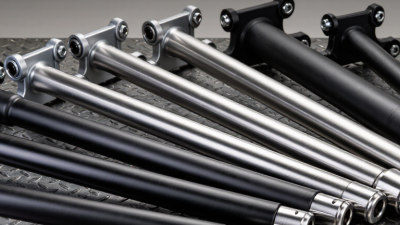
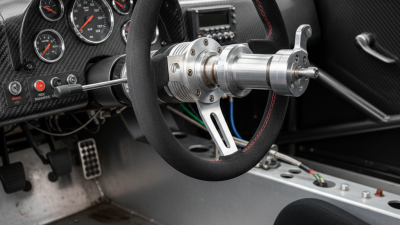
10 Best Drag Racing Steering Columns for Sale?
Choosing a drag racing steering column is not only about weight, finish, or showroom appeal. It affects steering precision, driver position, chassis packaging, and emergency control. A polished aluminum tube may look impressive, yet hidden flex can change the car’s behavior at launch. That detail is easy to miss.
SEMA’s 2023 Market Report valued the U.S. specialty-equipment automotive market at $52.3 billion. This figure reflects strong demand for performance components, but it does not prove that every product meets racing needs. NHRA technical rules and manufacturer installation instructions remain essential references. They help buyers check collapsible designs, shaft alignment, mounting strength, and compatible steering joints. Professional builders also inspect welds, bearing support, and clearance around headers before judging appearance.
Carroll Smith, a respected racing engineer and author of Tune to Win, wrote, “If it looks right, it probably is right.” His observation is useful, but incomplete here. A steering column must measure right, too. That means confirming diameter, length, spline pattern, collapsibility, and vehicle-specific fitment. Small errors become obvious when a wheel sits too close to the driver’s knees or contacts a tube during hard launches.
This guide examines ten drag racing steering column options for sale. Each selection deserves a practical review, not a rushed ranking. Some products may suit a compact bracket car, while others fit a professional tube-chassis build. I may favor serviceability over appearance, and that judgment can be debated. The strongest choice is the column that remains rigid, aligned, accessible, and properly supported after installation.
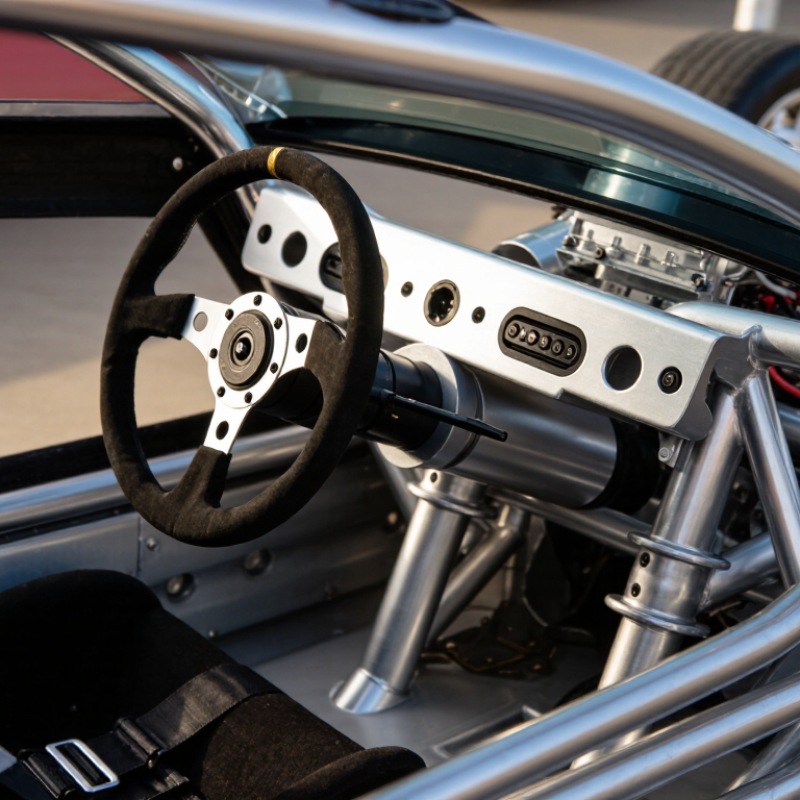
What Makes a Steering Column Suitable for Drag Racing
10 Best Drag Racing Steering Columns for Sale?
What Makes a Steering Column Suitable for Drag Racing
A drag racing steering column must control the car precisely during hard launches. Rigidity matters because flex can change steering feedback when the front tires become light. Look for strong shaft support, secure mounting points, and quality bearings that resist play. Even a small amount of looseness can become obvious at high speed.
Keep it simple.
A suitable column should also fit the vehicle’s chassis without forcing awkward angles. The steering wheel should sit close enough for relaxed control, while the shaft must clear headers, pedals, wiring, and suspension components. A collapsible design can improve impact protection, but it must remain compatible with the car’s safety equipment and competition rules. Check measurements twice. A column that looks perfect online may require unwanted fabrication.
Heat and vibration deserve attention. Repeated launches can loosen fasteners, stress joints, and expose weak materials. Inspect the shaft after test sessions, especially around welds and universal joints. I once underestimated how quickly vibration could reveal a minor alignment problem. That mistake changed my inspection routine. Now, I check steering movement with the front wheels lifted, then verify smooth operation under load. Documentation, material specifications, and clear installation instructions also support a more reliable purchase. A lightweight column is useful, but reduced weight should never replace stiffness, predictable movement, or properly engineered safety features.
Key Features to Compare Before Buying a Racing Steering Column
Choosing among the 10 best drag racing steering columns for sale starts with fit, not appearance.
A column must match the chassis, steering box or rack, wheel, and driver position. Measure shaft length, spline count, diameter, and mounting-hole spacing before ordering.
SAE J670 defines steering-system terminology, but it does not confirm that two aftermarket shafts interchange. That distinction matters. The 2024 SEMA Market Research report valued U.S. specialty-equipment sales at $52.3 billion in 2023, showing a large market, not automatic compatibility.
Ask for drawings, tolerances, and material specifications.
Vague listings deserve caution.
Compare collapsible design, bearing support, tube stiffness, and firewall sealing.
A properly supported shaft should turn smoothly without radial play. Check it with the vehicle stationary. Verify quick-release hub compatibility and engagement depth instead of trusting product photos.
Steel usually tolerates abuse better, while aluminum can reduce mass but may offer less margin when poorly engineered. I sometimes overvalue weight savings. That is a mistake when bearing alignment remains uncertain.
Confirm weld quality, fastener grade, adjustment range, and documented testing.
FIA Appendix J guidance emphasizes secure steering-wheel retention and unobstructed driver control.
Use current technical documents with local race regulations. Leave room for gloves, harness movement, and helmet clearance.
Small interference becomes distracting at speed.
Ten Drag Racing Steering Columns Worth Considering
Ten Drag Racing Steering Columns Worth Considering
Choosing a drag racing steering column starts with fitment, not appearance. A poorly aligned column can create binding, vibration, or an awkward driving position. In workshop checks, I would compare ten practical designs: fixed steel, collapsible steel, lightweight aluminum, tilt-adjustable, telescoping, floor-mounted, dash-supported, splined-shaft, quick-release compatible, and custom-length columns. Each option changes cockpit space, steering feel, and installation effort. Measure twice.
SEMA’s 2023 Market Report valued U.S. vehicle accessorization spending at $52.3 billion in 2022. That figure shows strong demand for performance upgrades, but spending does not guarantee safe engineering. For drag applications, inspect shaft diameter, bearing support, mounting plates, weld quality, and joint angles. A collapsible design may offer useful impact management. A rigid design can feel sharper, yet it may demand more careful safety review. The best column is not always the lightest one.
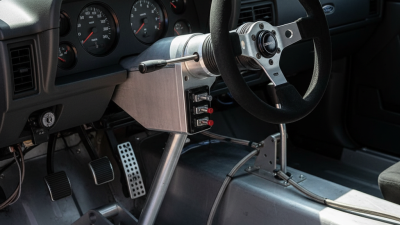
Professional competition rules and technical standards should guide the final selection. Check compatibility with the steering wheel, restraint system, chassis, and electrical switches. The column should rotate smoothly with the front wheels unloaded and loaded. No rubbing. No looseness. I would also verify manufacturer test documentation, since a polished finish can hide weak construction. My earlier preference for maximum adjustability has changed; extra joints can create more inspection points and more potential movement. That detail is easy to overlook.
How to Choose the Right Column for Your Race Car
10 Best Drag Racing Steering Columns for Sale?
How to Choose the Right Column for Your Race Car
Choosing a steering column starts with fit, not appearance. Measure the firewall opening, driver position, wheel height, and shaft angle. A fixed column usually offers better rigidity and fewer moving parts. A collapsible design may suit dual-purpose cars needing additional impact management. Check the current rules for your racing class before ordering. Requirements can change.
Look for strong bearings, precise shaft support, and compatible universal joints. Excess play around the wheel is unacceptable. SAE J944 guidance highlights the importance of steering-system strength and controlled movement. NHTSA’s Traffic Safety Facts reports that airbags saved 50,457 lives from 1987 through 2017. That data mainly covers road vehicles, but it still shows why restraint compatibility deserves attention. Do not assume a racing column works safely with a factory airbag or street system.
Tips: Mock up the seat, wheel, and pedals before final installation. Confirm spline size twice. Check full steering lock without binding. Use a qualified fabricator for mounts and welds. A common mistake is choosing the shortest column, then discovering poor knee clearance. I have seen “perfect” measurements fail after the seat moved backward. Recheck everything under real driving posture.
10 Best Drag Racing Steering Columns for Sale? How to Choose the Right Column for Your Race Car
For a drag racing car, the best steering column balances safety, driver position, steering precision, clearance, and low weight. A collapsible design, secure mounting, adequate shaft diameter, and compatibility with the steering wheel and universal joints should be confirmed before purchase.
Installation, Safety, and Maintenance Checks for Racing Columns
When comparing drag-racing steering columns for sale, installation quality matters more than appearance. Measure the cockpit before ordering. Confirm shaft length, spline size, mounting angle, and firewall clearance. The column must align without forcing the steering shaft sideways. Use properly rated fasteners and locking hardware. Never rely on welds that show porosity, cracks, or uneven penetration. A torque wrench is essential. Guessing is not a method.
Safety checks should follow the event’s current technical rules. NHRA competition regulations commonly require secure steering components, approved retention systems, and adequate driver clearance. Requirements can vary by class. Verify them before installation. NHTSA’s 2023 Traffic Safety Facts recorded 40,901 U.S. road fatalities. That report does not represent drag racing, but it reinforces a basic lesson: steering failures leave little room for correction. FIA safety guidance also emphasizes documented inspection and redundant protection around critical controls. I keep a written checklist, although I have occasionally missed small fastener damage during rushed preparation.
Before every event, inspect the column tube, bearings, couplers, splines, wheel attachment, and support brackets. Check for play with the front wheels unloaded. Rotate the wheel slowly and feel for tight spots. Recheck torque after the first test session. Look for fresh metal dust, loosened paint, or unusual vibration. Replace damaged parts instead of straightening them. Store the column dry and covered. Maintenance records should include dates, torque values, observed wear, and replacement decisions. Small details matter.